

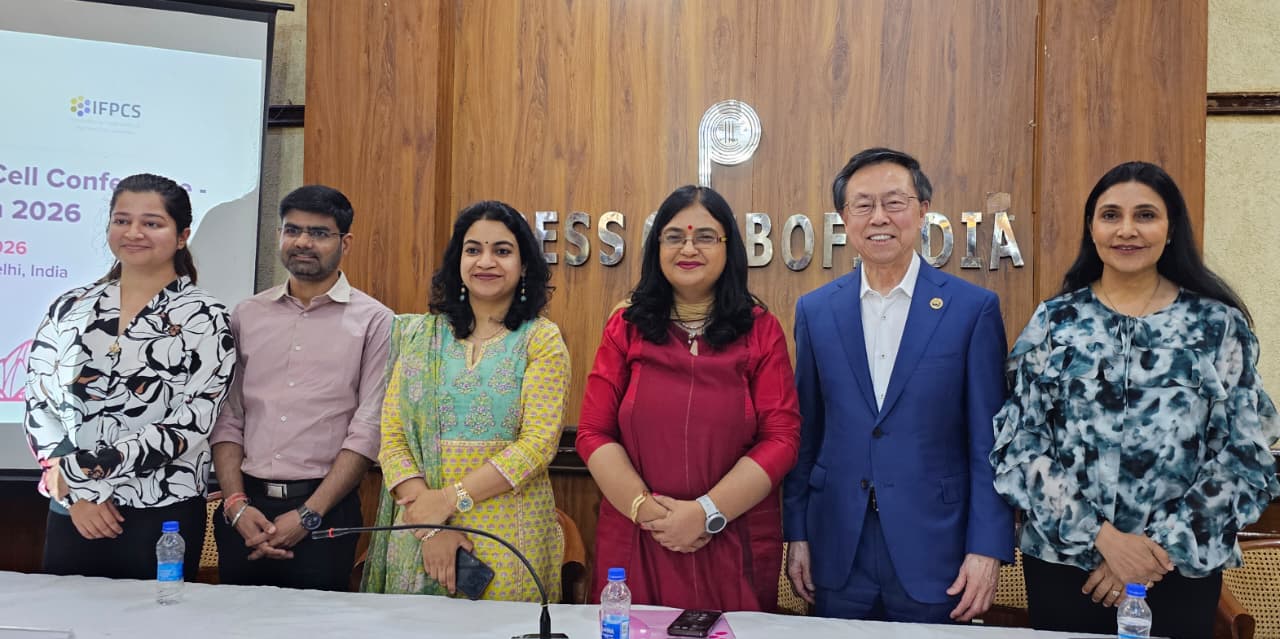
New Delhi, 30 April 2026: The 26th International Pigment Cell Conference (IPCC 2026) alongside the 7th PigmentaryCon 2026 will take place from April 30 to May 3 at the India Habitat Centre, New Delhi, bringing together dermatologists, researchers and clinicians from India and across the world for a four-day scientific programme.
Organised under the aegis of the Pigmentary Disorders Society (PDS), the conference is being hosted in India after over a decade and is expected to bring together around 30 international and 70 national experts. The programme will include keynote lectures, panel discussions, clinical workshops and demonstrations, with sessions focused on vitiligo, melasma, hyperpigmentation, albinism and related areas in pigmentary dermatology.
Designed as a platform for scientific exchange, the conference brings together perspectives across dermatology, genetics and clinical practice, with a focus on current research, treatment approaches and evolving standards of patient care.
The conference comes at a time when pigmentary disorders are receiving greater clinical and public attention. In India, where concerns around colour perception, misinformation and over-the-counter product use continue to influence patient behaviour, access to accurate diagnosis and appropriate treatment remains critical.
Dr Henry Lim, President of the International League of Dermatological Societies (ILDS), connects these concerns with ongoing global efforts, pointing to the organisation’s engagement with the World Health Organisation on skin health and patient safety, including concerns around mercury-based skin-lightening products and misuse of corticosteroid creams. “Across regions, similar concerns continue to emerge around unsafe practices, unregulated products and misinformation that directly affect patient outcomes. Strengthening awareness and clinical standards remains central to improving dermatological care,” he notes, placing IPCC 2026 within a broader international context.

At a national level, the Pigmentary Disorders Society continues to focus on awareness and clinical understanding of these conditions. Dr Rashmi Sarkar, President, Pigmentary Disorders Society and Director Professor, Dermatology Department, Lady Hardinge Medical College, and Organising Chair of IPCC 2026, draws attention to the range of conditions being addressed, including albinism and hyperpigmentation, along with the need for informed treatment approaches. “This is a conversation about care, dignity and safety. Pigmentary disorders continue to be widely misunderstood, often leading to delayed care or inappropriate treatment. Our work has focused on improving awareness, addressing misconceptions and encouraging approaches that prioritise patient wellbeing and clinical accuracy,” she says.
Clinical practice remains closely linked to patient behaviour and access to information. Dermatologists report a rise in self-medication and reliance on informal advice, which often complicates treatment pathways. Dr Latika Arya, Consultant Dermatologist, Dr Latika Arya Skin & Aesthetic Clinic, New Delhi, highlights the importance of early and accurate diagnosis. “In many cases, individuals rely on unverified recommendations or readily available products, which can delay proper care. Consulting a qualified dermatologist ensures that the condition is assessed correctly and managed with the right prescription,” she explains.
Concerns around the misuse of topical steroid creams and fairness products continue to be observed in clinical settings. Dr Surabhi Sinha, Assistant Professor, Dermatology Department, Lady Hardinge Medical College and Organising Secretary of IPCC 2026, notes that such practices frequently result in long-term skin damage. “We often see patients after prolonged unsupervised use, when the condition has already progressed and requires more complex management. This shows the need for stronger awareness and timely medical intervention,” she says.
Beyond clinical treatment, pigmentary disorders also carry a social dimension. Patients with visible skin conditions may experience stigma or discrimination, which can affect confidence and everyday interactions. Dr Amit Kumar Meena, Specialist, Deen Dayal Upadhyay Hospital, New Delhi, emphasises the need for wider understanding. “These conditions often influence how individuals are perceived in social and professional spaces. Greater awareness can play an important role in addressing this,” he adds.
With participation from leading international faculty, IPCC 2026 is expected to facilitate exchange across research, clinical practice and patient care. The conference places focus on improving understanding of pigmentary disorders, strengthening safe treatment practices and encouraging informed decision-making among both clinicians and patients.
